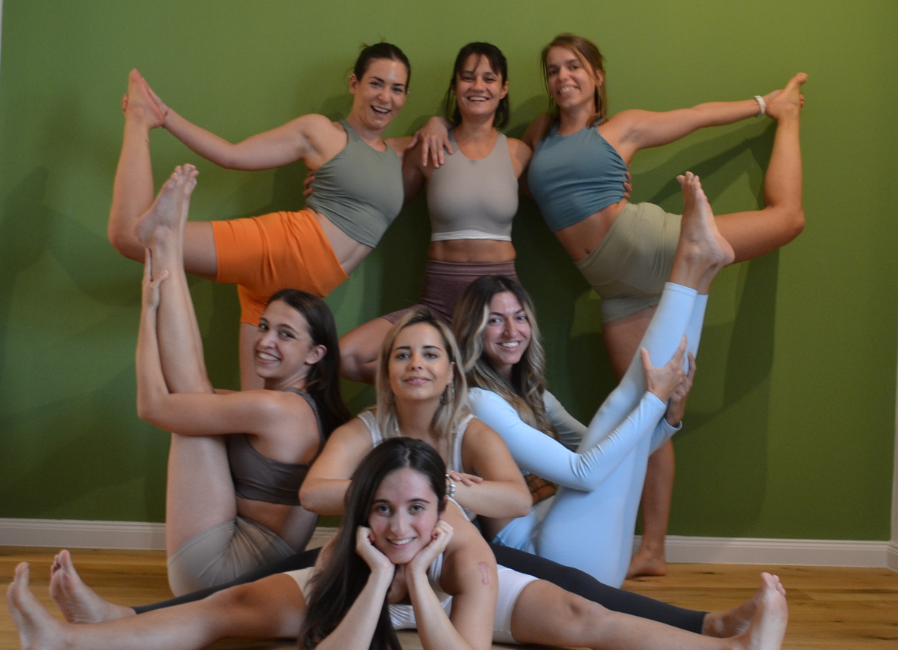
“The mind acts like an enemy for those who do not control it.”
-Bhagavad Gita
FAQ
- What does Astanga mean?
Astanga means “eight limbs,” as outlined by the sage Patanjali in the Yoga Sutras, an early framework for yoga practice. Patanjali can be seen as a pioneering psychologist who detailed the workings of the human mind and provided a logical path toward liberation. According to him, yoga consists of eight steps: Yama (ethical guidelines), Niyama (personal disciplines), Asana (posture), Pranayama (breath control), Pratyahara (sense withdrawal), Dharana (concentration), Dhyana (meditation), and Samadhi (absorption). The practice of Asana, the physical postures, stabilizes the body and senses, leading to a steady mind. It is often regarded as the gateway to developing the other steps. Practicing Astanga ultimately involves all eight limbs.
- What are Yamas and Niyamas?
The Yamas and Niyamas offer practical guidelines for yoga students, promoting both personal well-being and harmonious relationships with others. The five Yamas (how we relate to others) are Ahimsa (non-violence), Satya (truthfulness), Asteya (non-stealing), Brahmacharya (restraint), and Aparigraha (non-grasping). The five Niyamas (commitments to ourselves) are Saucha (cleanliness), Santosha (contentment), Tapas (discipline), Svadhyaya (self-study), and Isvara Pranidhana (surrender). When you face struggles, whether on or off the mat, the answer often lies within these principles.
- What is Tristana?
Astanga yoga uses a three-fold approach called Tristana: proper breathing technique, posture (asana) with the use of bandhas (core muscle activation), and drishti (focused gaze). This method cultivates control over the senses and deep self-awareness. Breathing is especially important, as focusing on the breath rather than just the postures brings deeper connection and awareness.
- What is Vinyasa?
In Astanga yoga, postures (asanas) are linked through flowing movements, synchronized with breath—this is known as Vinyasa. When breath, movement, and bandhas are integrated, strong internal heat is generated, promoting strength, lightness, and purification.
- What is Primary Series?
The Astanga system consists of six series: Primary, Intermediate, and Advanced A, B, C, and D. The Primary Series, known as Yoga Chikitsa (Yoga Therapy), is designed to align, strengthen, and heal the body. The Intermediate Series, Nadi Shodhana, focuses on purifying the nervous system. The Advanced Series, collectively called Sthira Bhaga (Steady Strength), requires a high level of strength and flexibility. The Primary Series serves as a lifelong companion for all practitioners and the foundation for further progression.
- How often should I practice?
Traditionally, Astanga yoga is practiced six days a week, with rest days on Saturdays or Sundays. A minimum of three practices per week is recommended, gradually increasing to six. It’s not about perfection or intensity but about consistency. Just showing up and being present with your breath and body, even briefly, cultivates steadiness of mind and enhances both practice and daily life. Over time, regular practice builds strength, flexibility, stamina, patience, and relaxation, while also nurturing focus and a sense of humor.
- I’m not flexible, can I practice yoga?
Yoga is for everyone. It will enhance flexibility and may also help you find peace with limitations, which often leads to surprising transformations. The greatest obstacle is often not physical but mental. Ideally, yoga helps us gain the courage to change what we can, accept what we cannot, and cultivate the wisdom to know the difference. The practice is adaptable to suit everyone’s needs, and Mysore-style teaching always provides individual guidance. - Why do I need to follow the sequence?
In Astanga yoga, each posture prepares the body for the next, creating a balanced and safe practice. Sticking to the sequence prevents practitioners from overemphasizing strengths while avoiding weaknesses, promoting both physical and mental balance. Following tradition doesn’t mean being rigid; the approach can be adapted according to individual needs. - How and when do I move on in my practice?
Modern approaches often stray from traditional sequences, allowing the mind’s preferences to dictate the practice. The classical lineage ensures the essential experience of yoga remains intact, free from ego-driven practices. - Do I have to practice early in the morning?
Progress in yoga is not about moving to more advanced postures but about deepening your current practice with humility and non-attachment. When you truly master what you are doing, progression happens naturally. Morning practice, known as ‘brahma muhurta,’ is considered the most auspicious time, as the mind is calmer and the body is rested. - What about pain or injuries?
It’s normal to experience pleasant soreness from practice, but pain signals you are overextending. Yoga is not about perfect postures but about tuning in and respecting your body’s limits. When pain or injury occurs, a skilled teacher can offer guidance and modifications to support healing and continued progress. - Why do we chant a mantra at the beginning of class?
The practice begins with a traditional opening chant in Mysore classes, a way to honor the lineage of practitioners before us. Chanting also helps students focus, bringing gratitude and intention to the practice. Participation is optional but recommended for its grounding benefits. - Why does practice make me feel emotions?
Astanga yoga works deeply, often bringing unresolved emotions or memories to the surface. This natural process allows for the release of past experiences stored within the body, promoting healing. - What about diet?
Diet also plays a role in yoga practice. Long-term, consistent practice often leads practitioners toward healthier, lighter food choices. However, dietary changes should be gradual and not forced; each person’s journey is unique. - Is yoga a religious practice?
Yoga transcends beliefs and traditions, offering practical tools for anyone seeking greater self-awareness, consciousness, and personal growth. While Astanga yoga promotes fitness, strength, flexibility, and endurance, it also supports other physical activities and integrates well with various lifestyles. - Is Astanga enough to make me fit?
Astanga yoga naturally builds physical fitness by making you fit, healthy, flexible, and strong, without the need to add other physical activities. However, it also complements a wide range of sports and exercise routines, so it’s perfectly fine to continue other physical activities while integrating Astanga into your daily life. The strength, flexibility, and focus developed through yoga can even enhance performance in other pursuits. In addition to meditation techniques, Astanga offers a balanced combination of strength, endurance, and aerobic training. - What if the practice doesn’t always feel fun?
Swami Satchidananda once compared yoga practice to an obstacle race. Challenges exist not to stop us but to help us discover our own strength. This inner power only emerges when we persist and allow ourselves to be tested. Yoga helps us harness that power and direct it toward positive growth and transformation.