
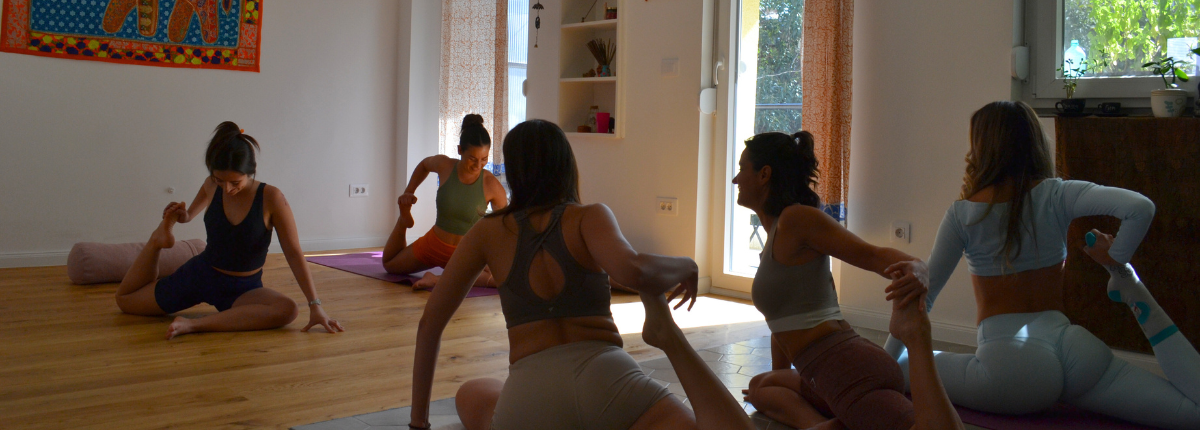
Why Mysore Practice?
Traditionally, yoga has always been about self-practice. Throughout history, teachings were passed directly from teacher to student in a one-on-one setting. While led classes have gained popularity worldwide, including in Ashtanga yoga, they often teach students in a somewhat reversed manner. When transitioning to a Mysore-style practice, practitioners may find themselves needing to unlearn habits and misconceptions picked up from led classes.
Why Joining a Mysore Class and Developing a Self-Practice is Beneficial:
- Every individual is unique, and no guided class can cater to everyone’s specific needs. In fast-paced led classes, students are often pushed into postures they aren’t ready for, with limited or insufficient guidance. This approach has unfortunately led to many injuries, frustrations, and misunderstandings.
- Mysore-style practice offers a personalized approach where students progress at their own pace, learning to approach the practice with patience and skill. Teachers provide personal adjustments, helping students find proper alignment and teaching new postures when appropriate. They get to know each student’s practice thoroughly, offering individualized support without the high cost of private lessons.
- Unlike in led classes, the teacher isn’t there to count or guide every movement. Instead, they encourage students to focus inwardly, listen to their own bodies, and gradually still the mind, which is the ultimate purpose of yoga. Through consistent self-practice, students gradually memorize the sequence, developing concentration and a deeper, more meditative connection with the practice.
- Owning your practice by memorizing the sequence allows you to take it wherever you go. It also gives you the freedom to dedicate more time to areas that need extra attention and to practice self-care by slowing down when necessary. This independence helps you fully integrate what you’ve learned from your teacher, building self-reliance and mindfulness on the mat and in everyday life.
- Mysore-style practice is quiet and introspective. There’s no music, no constant talking—just your breath and movement. Instructions are practical and straightforward, allowing you to explore and understand your own practice. It becomes a moving meditation, deeply personal and transformative.
- The beauty of this practice is its accessibility—anyone can begin, regardless of experience or preparation. Consistency is key. It doesn’t matter if your practice isn’t perfect, deep, or long. What matters is that it happens regularly. Even starting with just 10 minutes a day can build positive momentum, encouraging you to return to the mat again and again. Over time, the practice becomes an integral part of your life—an uplifting habit with only positive side effects.
Benefits of Regular Ashtanga Practice:
- Feeling light, energized, and revitalized.
- Enhancing physical fitness while keeping the body and mind youthful, fresh, and strong.
- Restoring vital energy and life force to the body.
- Calming the mind and improving concentration, focus, and awareness.
- Cultivating a more positive and balanced perspective toward daily life and its challenges.
- Providing effective, time-tested tools for managing stress and pain.
- Enhancing the quality and awareness of breath.
- Supporting and enhancing any activities or goals you pursue in life.
- Building resilience to navigate life’s ups and downs with calmness and clarity.
- Serving as a powerful complementary practice for sports and other physical activities.
- Offering a genuine path toward self-discovery, fostering contentment and presence in the moment.